A stunning Victorian gothic deckbuilder with masterfully designed systems that prove there's still room for genuine innovation in the genre.
Introduction
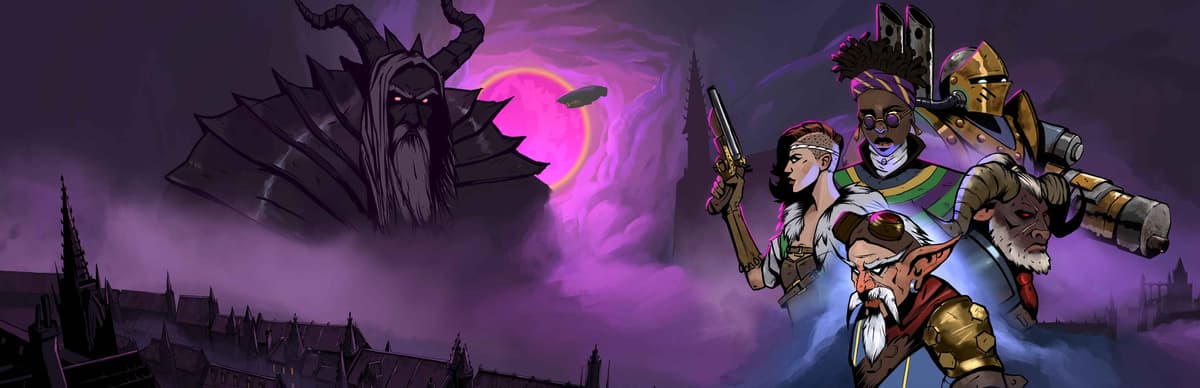
Hunter's Moon: A Sovereign Syndicate Adventure is a roguelite deckbuilder set in a Victorian cyberpunk London that immediately captured me with its art style alone. The grotesque horror monster design coupled with the Victorian setting makes for a perfect combination that hooked me even before I touched the gameplay. After a little over 18 hours, I've beaten all four of the game's locations with three of them at 100% completion. But being a roguelite, the game has endless replayability built into its systems.
Familiar Yet Fresh
If you're a fan of roguelike deckbuilders like Slay the Spire, Hunter's Moon will feel immediately familiar. It's true to the gameplay you're used to in this genre, but instead of just having a character deck plus a list of relics, Hunter's Moon offers more avenues for variety and buildcrafting. Whether that's the cool tarot cards, consumables, or the talent trees, there are multiple axes to explore when crafting your runs.
The Travel Deck Revolution
I really loved the travel deck system. Rather than the classic map with different diverging paths, Hunter's Moon gamified this system with what it calls a "travel deck." Instead of clicking on the next location on a map, you have three travel decks and you're picking which encounter, event, or location you're going to next. Each deck is a collection of cards where you can see a few cards under the visible one on top.
There's room for planning ahead, but you can't see too far to get overwhelmed with choice or analysis paralysis. It's the perfect balance of giving you agency without overwhelming you with options. Even better, the travel deck is a mechanic you can influence with your build. You might take items that give you more choice or let you see further ahead, or you can sacrifice this choice completely for more combat power.
The Doom System
The travel deck system is cool, but what makes it even better and gives it more depth is the doom system. There's an impending doom mechanic where each card in your travel deck has a cost that fills the doom meter by a certain amount. When this meter is full, the doom level goes up by one, which means enemy encounters become more deadly.
Sure, you can pick all the safe travel cards to get more powerful and boost your build, but those cards might cost more, so you might find yourself increasing the doom level sooner than you thought. Similar to the travel deck, you can find things that affect both this system and the actual battle gameplay. For example, there's a tarot card that gives you +1 maximum energy, which is a major power spike, but it causes battles to fill the doom meter even faster. The risk-reward with all these systems affecting each other is just masterful game design.
What Works
- Beautiful Victorian cyberpunk art style and setting
- Genius travel deck system with perfect agency balance
- Brilliant doom mechanic creates meaningful risk-reward
- Four characters with diverse playstyles and talent trees
- Shared talent points encourage experimenting with new characters
- Great meta progression with airship repairs
- Persistent choice outcomes across runs
- Endless build variety through multiple systems
What Doesn't
- Limited card pools per character
- Inconsistent keyword tooltips for tarots and relics
- Card upgrade UX needs more polish
Character Diversity
The game has four characters. You start with a single character but can unlock more as you "repair your airship." These characters are really cool and should cover all playstyles. Each one even supports multiple playstyles within itself, which is where the roguelite aspect shines. Each character has eight talents you can unlock and upgrade, split into two sets of four talents that synergize well together.
It feels like each character has two "subclasses" that you can either fully invest in one path or mix and match based on however many talent points you have. These points are gained from run XP, and the good thing is they're shared across characters. You're not discouraged from playing the new character you unlock because they'll have all the talent points you've earned ready to spend. You can jump in without feeling like you downgraded in power.
The game went above and beyond in terms of playstyle diversity. Between the different systems like tarots, relics, talents, doom, and your own unique pool of cards for each character, you suddenly have endless combinations to enjoy. I do wish there were more cards in each character's pool to introduce extra diversity there as well.
Meta Progression Done Right
As mentioned before, this is a roguelite, which I enjoy. There are two ways to progress. You can do repairs to your airship, which are global unlocks you pay for with scrap. This is a currency you can get in some non-combat encounters. These upgrades can vary from more HP percentage to your character, more XP or gold you can find, and even unlocking new characters. These are split into six categories with four levels each. The scrap requirement goes up with each level, but the more powerful upgrades are actually in the lower levels. It's a really cool system that, combined with the talent system, makes for great meta progression where every run feels worth it.
UI and UX Mixed Bag
I really liked the UI of the game. I thought it was fitting for the aesthetic and was snappy to use. The UX, however, I'm more torn about. I thought it was really good in some things and terrible in others.
Starting with the positives, I love the idea of the game showing you what you got in past choices. There are many non-combat encounters that have several options. The first time, you see question marks because you don't know what can happen. But if you choose an option, next time you face the same choice, that option's conclusion is now revealed, whether positive or negative, and it persists across runs. I love this as someone who struggled with remembering which option did what and which one is best for me this run. This was easily one of my top three systems this game offers.
But the user experience disappointed me in other parts, mainly in providing information. Sure, when you hover a card, it shows an explanation for any buff or debuff keywords. But this doesn't carry over to things like tarot cards or relics. This was frustrating, especially in the early game, as I'd get things that don't explain what keywords like "travel deck," "ability," or "doom" mean. Hovering the tarot card or relic gave nothing beyond the description, and I wish this was more consistent with the other keyword explanations. Of course, this became a non-issue as I understood the game better. The card upgrade UX can also use some more polish. It requires more clicks than it should and can be annoying if you still don't know what every card's upgrade does.
Verdict
Hunter's Moon is an exceptional entry in the roguelike deckbuilder genre that proves there's still room for innovation. The travel deck and doom systems are genuine game design brilliance that create meaningful decisions every step of the way. The Victorian cyberpunk setting with its grotesque horror aesthetic is captivating, and the art style is masterful. The character diversity through talent trees, combined with tarots, relics, and the various systems all affecting each other, creates endless build possibilities. The persistent choice memory across runs is one of my favorite quality of life features I've seen in the genre. Yes, the UX has some inconsistencies with tooltips, and I'd love to see larger card pools for each character. The card upgrade interface could use streamlining too. But these are minor complaints in a game that otherwise delivers an outstanding deckbuilding experience with systems that genuinely enhance rather than just complicate the formula. This is a must-play for fans of the genre.
Recommended For
- • Slay the Spire fans wanting fresh mechanics
- • Players who love meaningful risk-reward decisions
- • Anyone who appreciates Victorian gothic aesthetics
- • Deckbuilder enthusiasts seeking build variety
- • Roguelite fans who value smart meta progression
Skip If
- • You need extensive tooltips and perfect UX
- • You prefer straightforward map progression over gamified systems
- • Gothic horror aesthetics aren't your thing
Final Score
Our editorial rating for Hunter's Moon: A Sovereign Syndicate Adventure